




Best Countries to Study MBA Abroad for Indian Students (2027): Fees, Universities & Career Scope
Deciding where to study MBA abroad is one of the biggest financial and career decisions an Indian student will make. An MBA abroad isn’t just another degree it’s an investment that shapes your salary trajectory, your professional network, and often your long-term immigration path.
There is no single “best” country for every student. Some destinations offer globally ranked business schools but demand a steep tuition outlay. Others trade brand prestige for affordability, faster post-study work access, and a quicker return on investment.
This guide compares the six countries Indian students ask us about most UK, Ireland, France, Germany, Canada and Australia across tuition, living costs, top schools and (critically, for 2027 applicants) the post-study work visa rules currently in force, some of which are changing. Whether your goal is consulting, finance, entrepreneurship, technology, or general management, this breakdown will help you shortlist with real numbers rather than rankings alone.
There is no single “best” country for every student. Some destinations offer globally ranked business schools but demand a steep tuition outlay. Others trade brand prestige for affordability, faster post-study work access and a quicker return on investment.
Why Study an MBA Abroad?
An international MBA delivers more than a classroom curriculum:
- Exposure to global business practices and case studies
- A genuinely international peer network
- Higher average salary uplift than most domestic MBA program
- Direct recruiting access to multinational employers
- Live industry projects and consulting assignments
- Structured internships built into the program
- Sharper leadership and cross-cultural management skills
- In most countries, eligibility for a post-study work visa without needing a job offer first
For many Indian professionals, the MBA itself is only half the value the other half is the 12–36 months of legal work access afterward, which is often what actually converts the degree into a long-term international career.
Best Countries to Study MBA Abroad — At a Glance
| Country | Tuition (Total) | Duration | Post-Study Work | Overall Value |
|---|---|---|---|---|
| UK | ₹25–55 Lakhs | 1 Year | 18 months (2 yrs if you apply before 31 Dec 2026) | ⭐⭐⭐⭐⭐ |
| Ireland | ₹18–35 Lakhs | 1 Year | Up to 24 months | ⭐⭐⭐⭐⭐ |
| France | ₹15–40 Lakhs | 1–2 Years | 12 months | ⭐⭐⭐⭐☆ |
| Germany | ₹0–20 Lakhs | 1.5–2 Years | Up to 18 months | ⭐⭐⭐⭐☆ |
| Canada | ₹28–45 Lakhs | 1–2 Years | Up to 3 years | ⭐⭐⭐⭐☆ |
| Australia | ₹30–48 Lakhs | 1.5–2 Years | Up to 3 years* (Indian nationals) | ⭐⭐⭐⭐☆ |
*Australia figure reflects the extra stay-back year Indian graduates get under the India–Australia ECTA agreement, on top of the standard 2-year Subclass 485 for master’s coursework degrees.
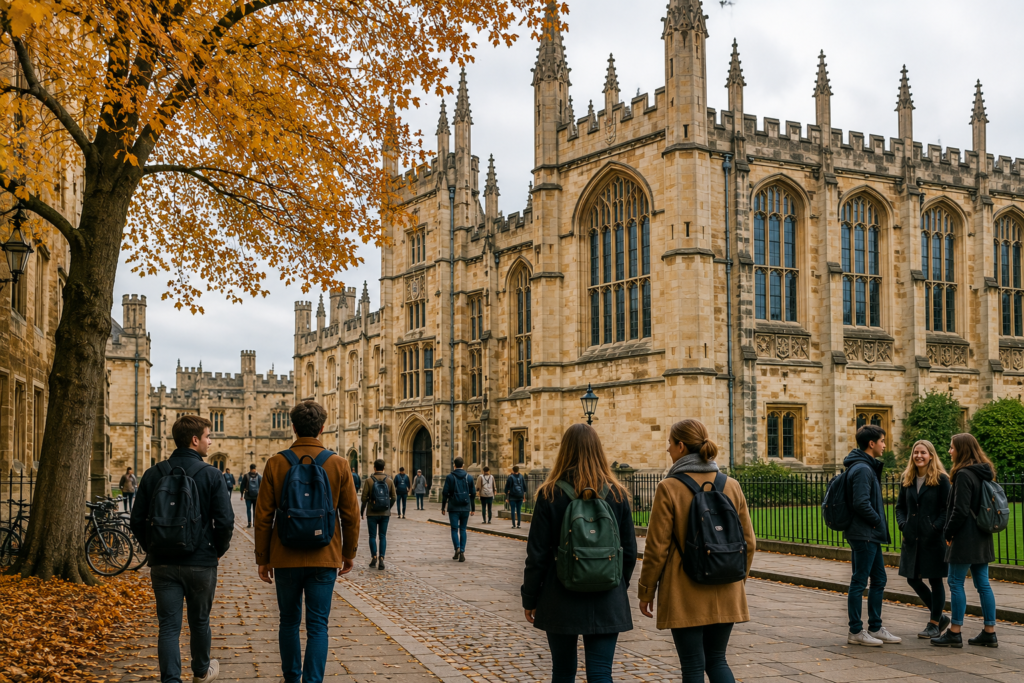
1. Study MBA in United Kingdom
The UK remains one of the most prestigious MBA destinations in the world, and its one-year program mean lower total cost and a faster return to earning compared to two-year formats elsewhere.
Important update for 2027 applicants: The UK’s Graduate Route currently grants 2 years of unsponsored post-study work. But under confirmed Home Office changes, graduates who apply for the Graduate Route on or after 1 January 2027 will get 18 months instead of 2 years (doctoral graduates remain unaffected at 3 years). If your MBA timeline has you finishing in late 2026, applying before the 31 December 2026 cutoff still secures the full 2-year window — this is genuinely worth planning around rather than treating as a footnote.
Popular MBA specialisations:
- Finance
- Marketing
- International Business
- Business Analytics
- Human Resource Management
- Entrepreneurship
Top Universities: University of Oxford, University of Cambridge, Imperial College London, University of Warwick, Cranfield University
Average Tuition: ₹25–55 Lakhs Living Costs: ₹12–18 Lakhs per year Post-Study Work: Graduate Route 18 months for applications from 1 Jan 2027 onward, 2 years if you apply on or before 31 Dec 2026 Best For: Consulting, investment banking, finance, and multinational corporate roles.
*For more information on universities in a tight budget you can have a look at our blog here https://pinakin.education/affordable-uk-universities-under-12-lakhs-2026/
*More information on NHS charges for student visa you can have a look at
https://pinakin.education/uk-nhs-surcharge-indian-students/
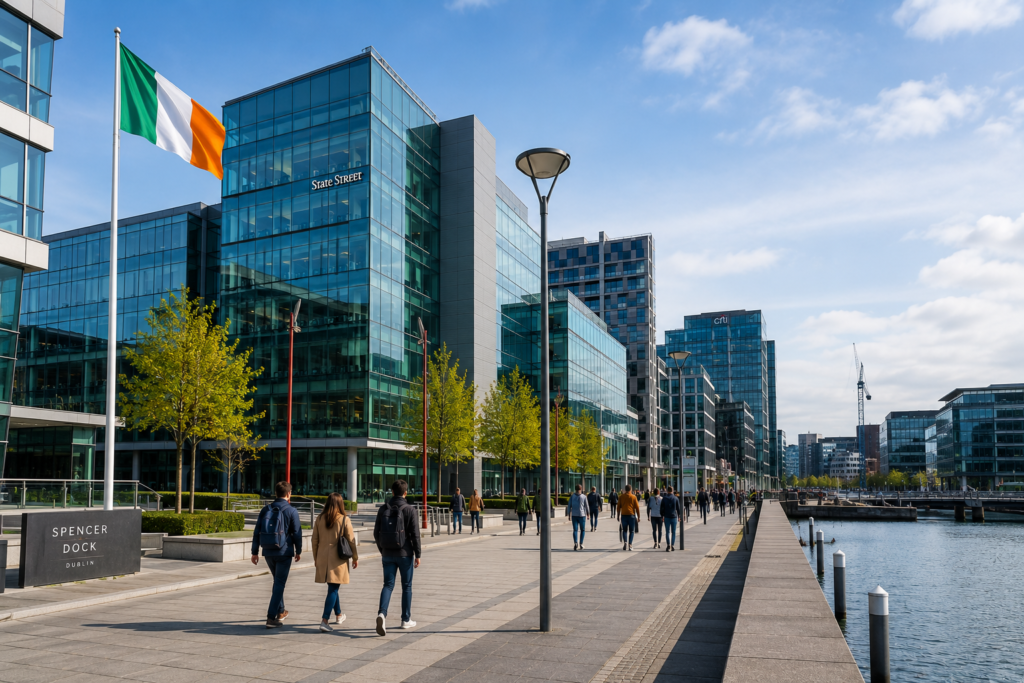
2. Study MBA in Ireland
Ireland has become one of the fastest-growing MBA destinations for Indian students, largely on the back of its outsized tech and pharma sector. Google, Meta, Microsoft, Amazon and LinkedIn all run their European headquarters out of Dublin, which keeps demand for business graduates unusually strong for a country of Ireland’s size.
Top Universities: Trinity College Dublin, University College Dublin, Dublin City University, University of Galway
Tuition Fees: ₹18–35 Lakhs Living Costs: ₹10–15 Lakhs annually Post-Study Work: The Third Level Graduate Programme (Stamp 1G) grants master’s graduates up to 24 months — an initial 12-month permission followed by a 12-month renewal — with no job offer required to qualify.
Advantages:
- English-speaking
- Strong technology and pharma sector demand
- One of the most generous post-study work windows among English-speaking destinations
- Straightforward transition path to a Critical Skills Employment Permit
*For more information on all the costs involved while studying in Ireland you can visit out blog here https://pinakin.education/cost-of-studying-in-ireland-for-indian-students-2027/

3. Study MBA in France
French business schools combine strong global rankings with tuition that undercuts the UK and US significantly, and most programmes are built around internships and live company projects rather than pure classroom teaching.
Top Universities: HEC Paris, ESSEC Business School, EDHEC Business School, Grenoble Ecole de Management
Tuition Fees: ₹15–40 Lakhs Living Costs: ₹9–14 Lakhs annually Post-Study Work: The APS (Autorisation Provisoire de Séjour, officially the RECE permit) gives master’s graduates 12 months to find a qualifying job or start a business, with full-time work rights during that year. Once you land a role paying above roughly 1.5x the French minimum wage (SMIC), you convert to a Passeport Talent or salarié work permit.
Best For: Luxury management, international business, fashion business, and entrepreneurship
*For more information on how to study in france without ielts you can read our blog here https://pinakin.education/study-in-france-without-ielts-for-indian-students-2027/
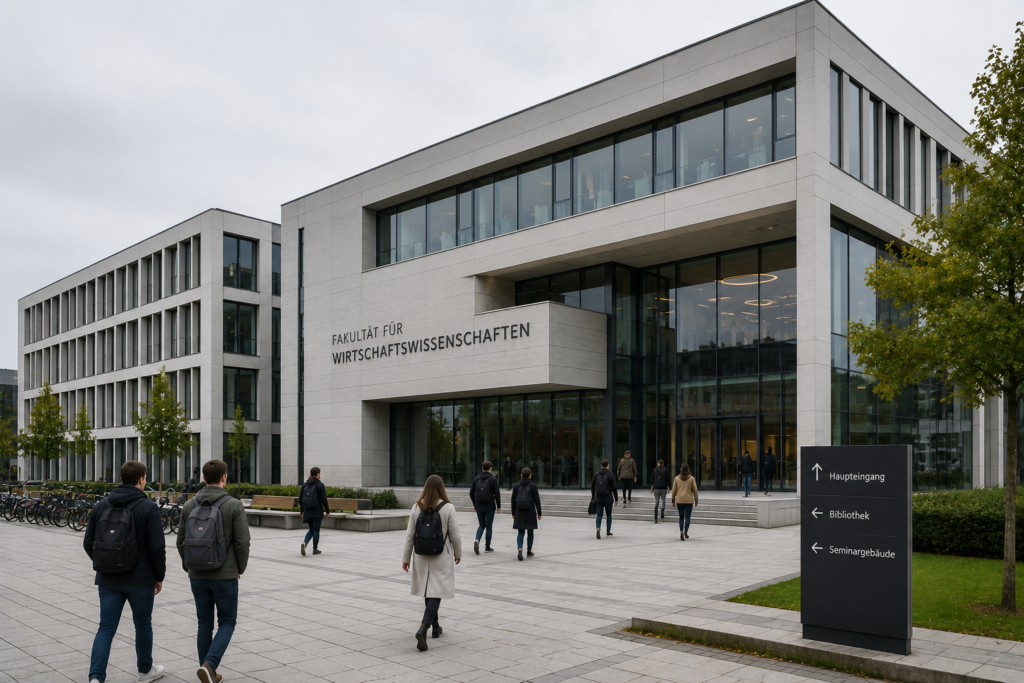
4. Study MBA in Germany
Germany’s public universities charge little to no tuition, which makes it the strongest ROI play on this list — especially paired with Europe’s largest economy and a business culture with deep manufacturing and engineering roots.
Top Universities: Mannheim Business School, ESMT Berlin, Frankfurt School of Finance & Management, WHU Otto Beisheim School of Management
Tuition Fees: ₹0–20 Lakhs (public universities typically charge only a nominal semester contribution; private business schools cost more) Living Costs: ₹9–13 Lakhs annually Post-Study Work: Graduates get up to 18 months to search for a job that matches their qualification, with the right to work in any field during that period. Once employed, most graduates move onto an EU Blue Card or a standard German work permit.
Advantages:
- Very low or zero tuition at public universities
- Strongest manufacturing and engineering-linked economy in Europe
- High graduate salary potential relative to tuition invested
*For more information on APS and dMat exam you can read our blog here https://pinakin.education/germany-aps-dmat-exam-2027/
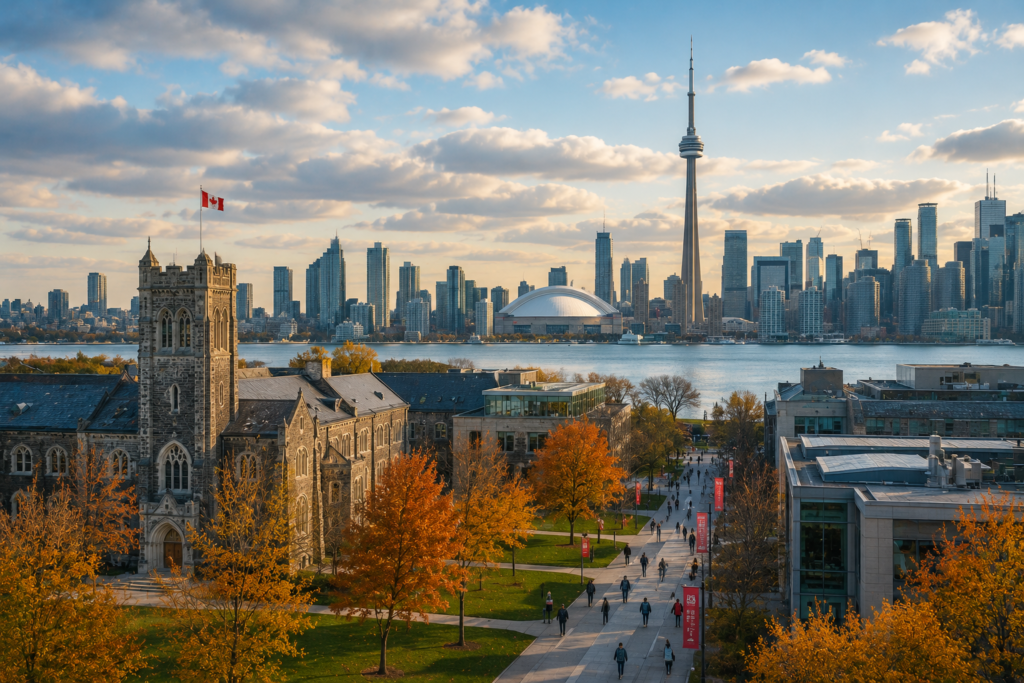
5. Study MBA in Canada
Canada’s appeal for MBA students has shifted over the last two years. Overall international student intake was cut sharply for 2026, but university-level degrees — including MBAs — remain fully exempt from the field-of-study restrictions that now affect college diploma programmes, and this exemption is not changing in 2026.
Top Universities: Rotman School of Management (Toronto), Ivey Business School (Western), Schulich School of Business (York), Smith School of Business (Queen’s)
Tuition Fees: ₹28–45 Lakhs Living Costs: ₹12–16 Lakhs annually Post-Study Work: The Post-Graduation Work Permit (PGWP) grants master’s graduates up to 3 years, provided the programme runs at least 8 months — MBAs comfortably clear this bar. The PGWP is an open work permit, so there’s no requirement to work in a specific field.
What’s changed: Canada reduced overall international student permit numbers substantially for 2026, so admission is more competitive than it was two years ago. Once admitted and enrolled, though, MBA graduates’ PGWP eligibility is unaffected by these cuts.
Best For: Students prioritising the longest guaranteed post-study work runway and a clear pathway to Express Entry permanent residency.
6. Study MBA in Australia
Australia offers one of the longest post-study work windows for Indian students specifically, thanks to a bilateral trade agreement that most competing consultancy blogs don’t mention.
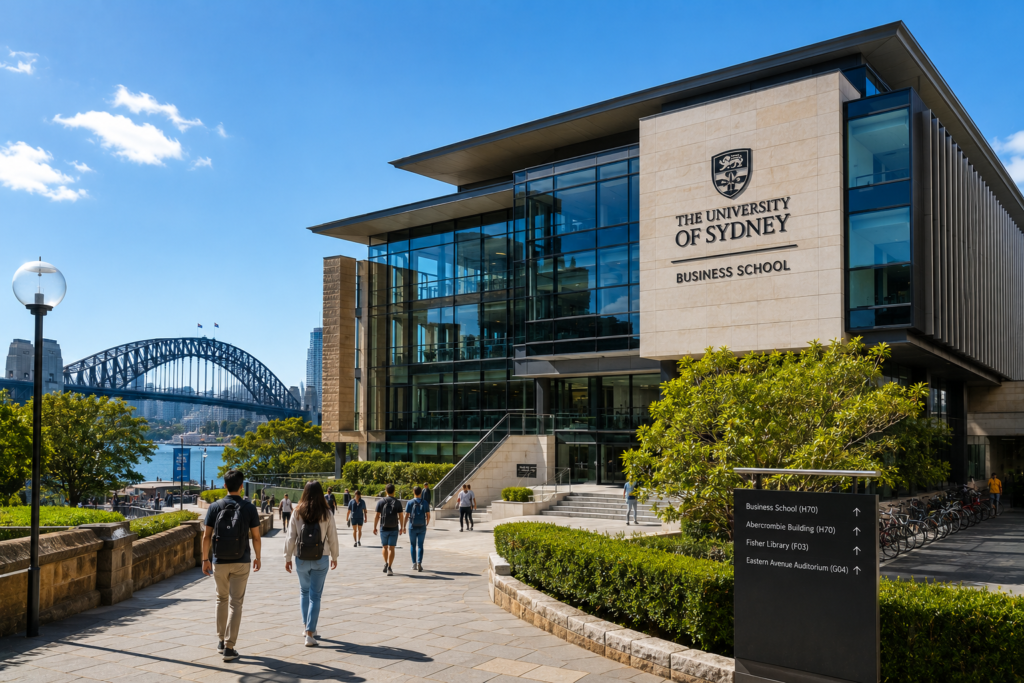
Top Universities: University of Melbourne, University of Sydney, UNSW Business School, Monash Business School, University of Queensland
Tuition Fees: ₹30–48 Lakhs Living Costs: ₹14–20 Lakhs annually Post-Study Work: The standard Subclass 485 (Temporary Graduate) visa grants master’s coursework graduates 2 years. Under the India–Australia Economic Cooperation and Trade Agreement (ECTA), Indian nationals get an additional 1 year on top of this — bringing the total to roughly 3 years for most MBA graduates.
Points to plan around:
- Applicants must generally be under 35 at the time of application (research master’s and PhD graduates get an exception up to 50)
- Visa application fees have risen substantially in 2026, so budget for this as a separate line item beyond tuition
- Regional study can add a further 1–2 years of stay-back on top of the above
Best For: Students who want the longest combined stay-back period and are targeting PR pathways through skilled migration.
Post-Study Work Visas — Side-by-Side Comparison
| Country | Visa Name | Duration for MBA (Master’s) | Job Offer Needed to Apply? |
|---|---|---|---|
| UK | Graduate Route | 18 months (from Jan 2027) / 2 years (apply by Dec 2026) | No |
| Ireland | Stamp 1G / Third Level Graduate Programme | Up to 24 months | No |
| France | APS / RECE | 12 months | No |
| Germany | Job Seeker Permission | Up to 18 months | No |
| Canada | PGWP | Up to 3 years | No |
| Australia | Subclass 485 | 2 years (+1 for Indian nationals under ECTA) | No |
How to Choose the Right Country for Your MBA
There’s no universal answer, but a few honest filters help:
- Chasing the longest work runway? Canada and Australia (for Indian nationals) currently offer the longest windows.
- Chasing lowest cost with strong ROI? Germany’s near-zero public university tuition is hard to beat.
- Chasing brand prestige for consulting/banking? The UK’s one-year MBAs from a small set of top schools still carry the strongest recruiter recognition in India.
- Chasing fastest, most predictable post-study transition? Ireland’s tech-sector density and generous Stamp 1G window make this an underrated pick.
- Timeline matters as much as the country. If you’re eyeing the UK specifically, applying to start your Graduate Route before 31 December 2026 is worth building your admissions and course-completion timeline around.
Frequently Asked Questions
Which country is best for MBA for Indian students in 2027? It depends on your priority. For post-study work duration, Canada and Australia (for Indian nationals via ECTA) currently lead. For affordability, Germany’s public universities are hard to beat. For brand recognition in consulting and finance recruiting, the UK still holds an edge.
Is an MBA in Germany worth it if tuition is nearly free? Yes, for students who want the best cost-to-outcome ratio in Europe. The trade-off is that German-language skills materially improve your job search, even though most MBA programmes are taught in English.
How long can I stay back in the UK after an MBA in 2027? If you apply for the Graduate Route on or after 1 January 2027, you get 18 months. If you complete your course and apply on or before 31 December 2026, you still get the full 2 years.
Do I need a job offer to get a post-study work visa? No — none of the six countries covered here require a job offer to apply for their respective post-study work permits. All of them allow you to search for work, or start one, once you’re in-country on that permission.
Which country offers the longest post-study stay-back for Indian MBA graduates? Canada’s PGWP (up to 3 years) and Australia’s Subclass 485 with the ECTA bonus year (up to roughly 3 years) currently offer the longest windows among the six.
Conclusion
An MBA abroad is a multi-year financial and career commitment, and the “best” country genuinely depends on what you’re optimising for cost, prestige, post-study runway, or PR pathway. The UK’s 2027 Graduate Route change is a good example of why these decisions shouldn’t be made on rankings lists alone: policy details shift, and the country that looked best eighteen months ago may have quietly changed its terms.
If you’d like a shortlist built around your specific budget, target industry and risk appetite, our counsellors at Pinakin Education can walk you through current intake deadlines, entrance exam requirements, and updated visa timelines for each of these six countries.
Book a Free MBA Abroad Counselling Session with Pinakin Education here https://pinakin.education/contact-us/
External Links (Official Government Sources)
- UK Graduate Route (official) — https://www.gov.uk/graduate-visa
- Ireland Third Level Graduate Programme / Stamp 1G (official) — https://www.irishimmigration.ie/my-situation-has-changed-since-i-arrived-in-ireland/third-level-graduate-programme/
- France post-study work permit (APS/RECE) — https://www.inde.campusfrance.org/
- Canada Post-Graduation Work Permit (official, IRCC) — https://www.canada.ca/en/immigration-refugees-citizenship/services/study-canada/work/after-graduation.html
- Australia Temporary Graduate visa Subclass 485 (official, Home Affairs) — https://immi.homeaffairs.gov.au/visas/getting-a-visa/visa-listing/temporary-graduate-485