



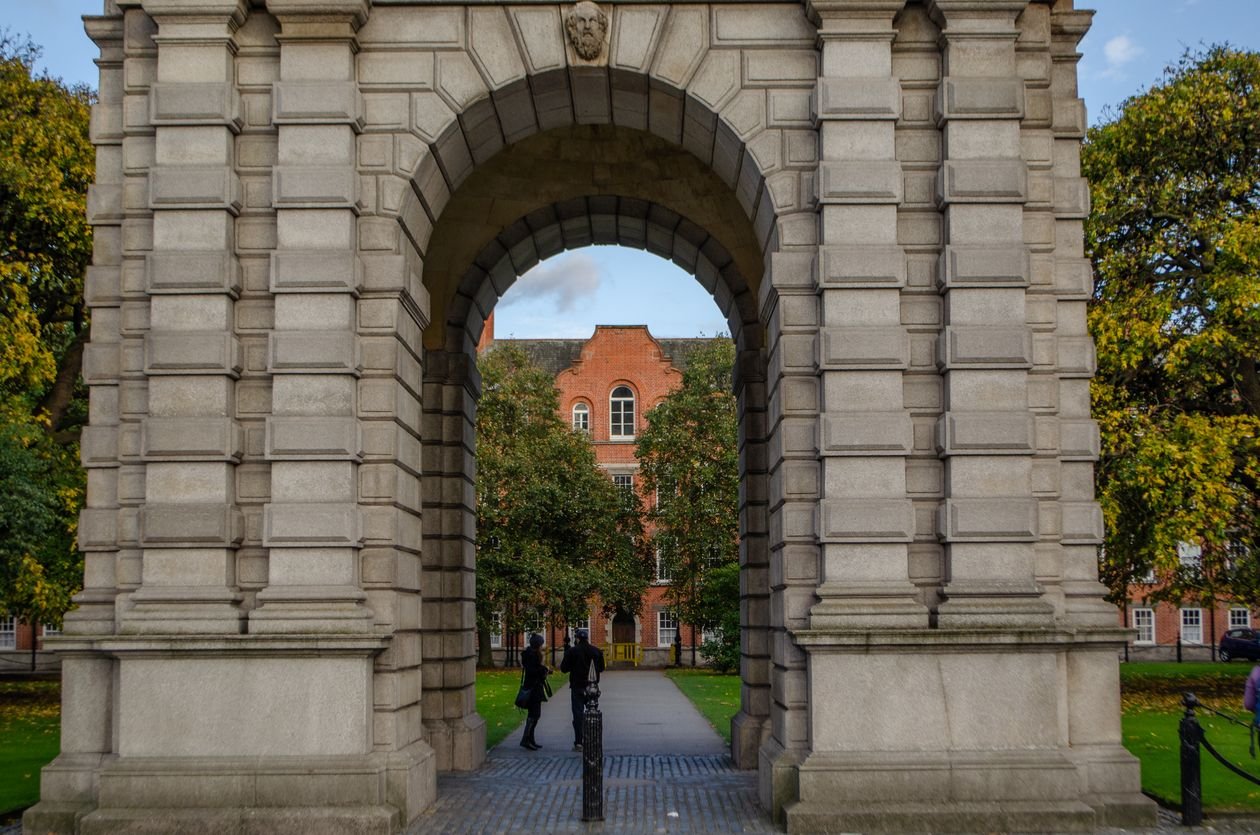
If you are weighing Ireland against the usual suspects—UK, US, Canada, Australia—stop treating it as a side‑note. Ireland now hosts over 35,000 international learners2 and is actively courting Indian talent.1 The country’s tech‑driven economy, English‑language environment, and generous post‑study work options8 make it a serious contender for anyone who wants a high‑quality degree without the sky‑high price tag of the UK or US.
This guide gives you the hard facts you need to decide whether Ireland fits your academic goals, budget, and career plan.
Written by: Pinakin Content Advisory Team · Supervised by: Preetesh Shirwaiker, Lead Counsellor
What “Study in Ireland” Actually Means for an Indian Student
Ireland’s third‑level sector comprises universities, technological universities, and institutes of technology—all of which are classified as higher education institutions (HEIs) and can award degrees from bachelor’s to PhD level.7
The university landscape includes the National University of Ireland system (UCD, University of Galway, University College Cork, Maynooth), Trinity College Dublin, University of Limerick, Dublin City University and RCSI University of Medicine and Health Sciences.7
Technological universities—TU Dublin, Munster TU, Technological University of the Shannon, Atlantic TU, and South East TU—focus on applied research and industry links.7
Two institutes of technology, IADT and Dundalk Institute of Technology, also offer specialised programmes in design, engineering and business.7
All these institutions are eligible to host Indian students, provided the programme appears on the Interim List of Eligible Programmes (ILEP).7
Official Options, Programmes and Institutions
Indian applicants can enrol in any full‑time undergraduate, taught‑master’s, research‑master’s or PhD programme that is ILEP‑approved. The ILEP is a government‑maintained list: enrolment on an ILEP‑approved course is required to be eligible for a student visa and part‑time work rights.4
At university level, Indian applicants most often consider Trinity College Dublin, UCD, University of Galway, University College Cork and Maynooth.7 Technological universities such as TU Dublin and Munster TU focus on applied programmes with industry links.7 Whatever you choose, confirm the exact programme is ILEP‑approved before you apply.
Because the ILEP list is public, you can verify any programme’s eligibility on the Irish Immigration Service Delivery website.8
Eligibility and Admission Requirements
- Academic Credentials – You must meet the university’s own entry requirements. These are set per institution and per programme, so check each campus before you apply.
- English Proficiency – Each HEI publishes its own English‑language requirement, so confirm the exact score your programme asks for before you book a test.
- Visa‑Relevant Enrollment – Your course must be on the ILEP to qualify for a ‘Stamp 2’ student permission. Non‑ILEP courses only grant a Stamp 2A, which does not allow part‑time work.8
- Financial Proof – You must show access to at least €10,000 (≈ ₹950,000) for each subsequent year of study, on top of tuition fees. For shorter courses (6–8 months) the required amount drops to €4,998 (≈ ₹474,810) or €6,665 (≈ ₹632,175) respectively.46
- Medical Insurance – Private medical insurance for the duration of your stay is mandatory.4
- Registration – After arrival, you must register with the Irish Immigration Service Delivery and obtain an Irish Residence Permit (IRP) if you stay longer than 90 days.46
- Family – Spouses and children must apply for their own visas; there is no dependent visa for Indian students.6
Tuition Fees, Living Costs and Major Expenses

Irish universities charge tuition in euros and set their own fee levels, so confirm the published figure for your exact programme. For context, the sector’s non‑EU fee income was €582 million in 2022, up from €415 million in 2018.2
Our cost of studying in Ireland guide sets out the full yearly picture. Living costs are partially covered by the Government of Ireland International Education Scholarship (GoI‑IES), which provides a €10,000 stipend (≈ ₹950,000) and a full tuition waiver for a one‑year master’s or PhD.3 Indian students are explicitly eligible because India is a target country.3
If you do not secure a scholarship, budget separately for accommodation, food, transport and personal expenses on top of tuition — and treat the €10,000 minimum fund requirement as the floor, not the ceiling.
Programme Duration, Intakes and Application Deadlines
Planning your intake early matters. Our Ireland January Intake 2027 guide covers the window and the application steps.
- Undergraduate degrees: typically 3‑4 years with a September start — confirm the exact structure with your institution.
- Taught master’s: typically 1 year from a September intake; a few programmes add other start dates.
- Research master’s / PhD: durations and start dates depend on the project and supervisor, so confirm directly.
The Irish government has fast‑tracked degree‑programme visas for international students, 1
Scholarships, Funding and Affordability
- Government of Ireland International Education Scholarship (GoI‑IES) – €10,000 living stipend + full tuition waiver for a one‑year master’s or PhD. Open to Indian students.3
- Government of Ireland International Scholarships – Broadly aim to attract high‑calibre students; competition is intense but they cover tuition and sometimes living costs.12
- University‑Specific Awards – Many Irish HEIs run their own scholarships for Indian applicants with varying coverage — check each institution’s published terms.
- Part‑time Work – While studying, you may work up to 20 hours per week during term time and up to 40 hours during holidays, which can offset part of your living costs.46
Because scholarships are limited, we advise treating the GoI‑IES as the primary target and backing it up with university‑level awards.
Career, Employability and Post‑Study Options

How the two graduate schemes compare
The Third Level Graduate Scheme offers 12 or 24 months with a Stamp 1G8. A Graduate Work Scheme has been proposed offering up to one year for NFQ level 8 and above.1
Ireland’s Third Level Graduate Scheme lets non‑EEA graduates with a level 8+ degree (bachelor’s honours or higher) stay for 12 or 24 months to seek employment. Successful applicants receive a Stamp 1G.8
The proposed Graduate Work Scheme (planned extension to all NFQ level 8 and above) would also permit a one‑year stay for work experience, subject to implementation, or to develop a business idea.1
During your studies, the right to work 20 hours weekly (40 hours during breaks) gives you Irish work experience that is highly valued by multinational firms in Dublin’s tech hub.46
While no job is guaranteed, the combination of a recognised Irish degree, work‑permit eligibility, and English fluency creates a strong employment profile.
Visa and Immigration Rules for Indian Students

Stamp 2 vs Stamp 2A
Stamp 2 requires an ILEP‑approved course and permits part‑time work84. Stamp 2A is issued for non‑ILEP courses and carries no work entitlement.8
| Permission | Course | Work rights |
|---|---|---|
| Stamp 2 | ILEP‑approved full‑time course | Up to 20 hrs/week term, 40 hrs holidays |
| Stamp 2A | Non‑ILEP course | No work entitlement |
- Visa Type – Courses longer than 3 months require a ‘D’ study visa; shorter courses need a ‘C’ visa.4
- Eligibility – You must be enrolled in an ILEP‑approved full‑time programme to obtain Stamp 2.48
- Financial Evidence – Show access to €10,000 (≈ ₹950,000) per year, or the scaled amounts for shorter programmes.46
- Medical Insurance – Private coverage is mandatory.4
- Registration & IRP – After arrival, register with the Irish Immigration Service Delivery and obtain an Irish Residence Permit (IRP) for stays over 90 days.4
- Work Rights – Stamp 2 holders can work up to 20 hours weekly during term and 40 hours during holidays.46
- British‑Irish Visa Scheme – If you already hold a short‑stay UK visa, you can travel to Ireland without a separate Irish visa. This covers short stays only — check the scheme’s current conditions before you travel.5
- Family – Dependents must apply independently; there is no dependent visa for Indian students.6
Our Recommendation
What this means for your planning:
- Target the GoI‑IES scholarship first – It covers tuition and provides a €10,000 (≈ ₹950,000) living stipend, dramatically reducing financial strain. India is a listed target country for the scheme, making it a competitive full‑funded option for Indian applicants.3
- Enroll in an ILEP‑approved master’s or PhD programme at a university with strong industry links – This meets the enrolment condition for visa eligibility and part‑time work rights, and keeps the 12‑ or 24‑month graduate scheme open for post‑study employment.48
- Avoid programmes not on the ILEP list – They carry no part‑time work entitlement and can put your permission conditions at risk.8
Next Steps – Book Your Personalized Ireland Strategy Session
- Review your grades and test scores against university cut‑offs.
- Identify the fastest scholarship routes (GoI‑IES, university awards).
- Outline the exact financial proof you need for the visa.
- Draft a timeline for applications, visa filing, and accommodation.
Book your session now: visit https://pinakin.education/contact-us/ or call +91 9372531177 / +91 9769370963, or email connect@pinakin.education with the subject line “Ireland Consultation”.
Where to Go Next
If you want the numbers in full, these pages already cover them in detail:
- Cost of studying in Ireland for Indian students (2027) — the detailed cost guide.
- Ireland January intake 2027: universities and deadlines — if you are applying for January 2027.
- Ireland visa checklist — the document stage.
- Ireland visa rejection guide — the most common refusal reasons.
Frequently Asked Questions
How much money do I need to show for visa purposes?
For a one‑year programme, you must prove access to €10,000 (≈ ₹950,000) per year, plus tuition fees. For 6‑month courses the requirement drops to €4,998 (≈ ₹474,810) or €6,665 (≈ ₹632,175) for 8‑month courses.46
Can I work while studying in Ireland?
Yes. Stamp 2 holders can work up to 20 hours per week during term time and up to 40 hours during holidays. This right is only available if your course is ILEP‑approved.46
What post‑study work options do I have?
After graduation, you can apply for the Third Level Graduate Scheme (12 or 24 months, Stamp 1G)8 or the proposed Graduate Work Scheme (up to one year for NFQ level 8 and above)1 to seek employment or start a business.
Sources
- Irelands International Education Strategy 2010 2015 Investing in Global Relat
- Global Citizens 2030 Ireland’s International Talent and Innovation
- Review of DFHERIS Scholarship Schemes
- Student visas to study in Ireland – Citizens Information
- Visa requirements for entering Ireland – Citizens Information
- Immigration rules for full-time non-EEA students
- Moving to Ireland for third-level education – Citizens Information
- Types of residence permission for non-EEA nationals – Citizens Information
Every student’s academic profile, budget and timeline differ. In a 30‑minute Pinakin consultation, we will. Start here: https://pinakin.education/contact-us/ — or call +91 9372531177 / +91 9769370963.
Most Irish applications fail on paperwork rather than on the application itself. Pinakin reviews your document set and visa evidence before you submit, so an avoidable documentation gap does not cost you a cycle.